CASE STUDY
Helping start-ups and small-to-medium-sized businesses win work with government.

-
As part of a wider program to encourage innovation, the federal government wanted to make it easier for start-ups and small and medium businesses to compete for the $5 billion that the Government spends each year on ICT.
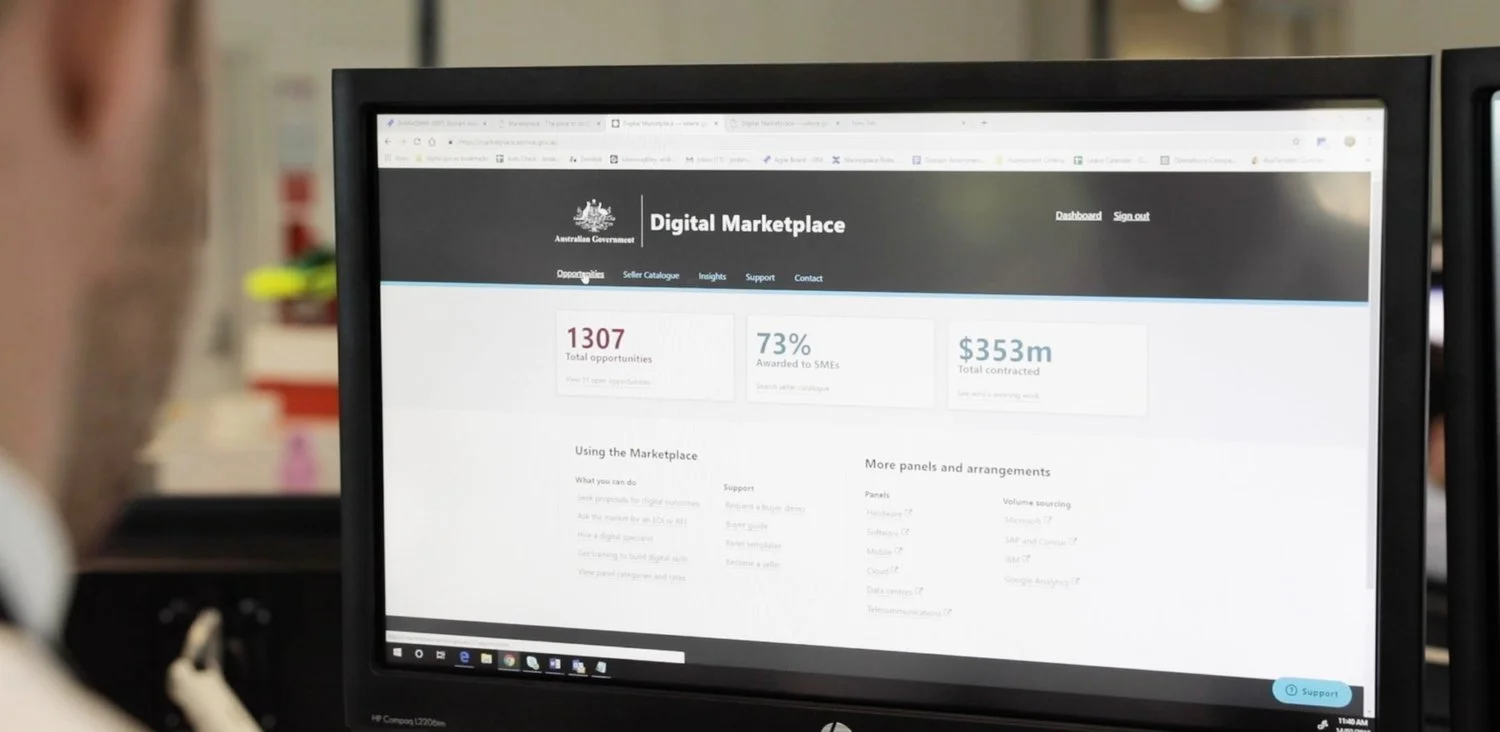
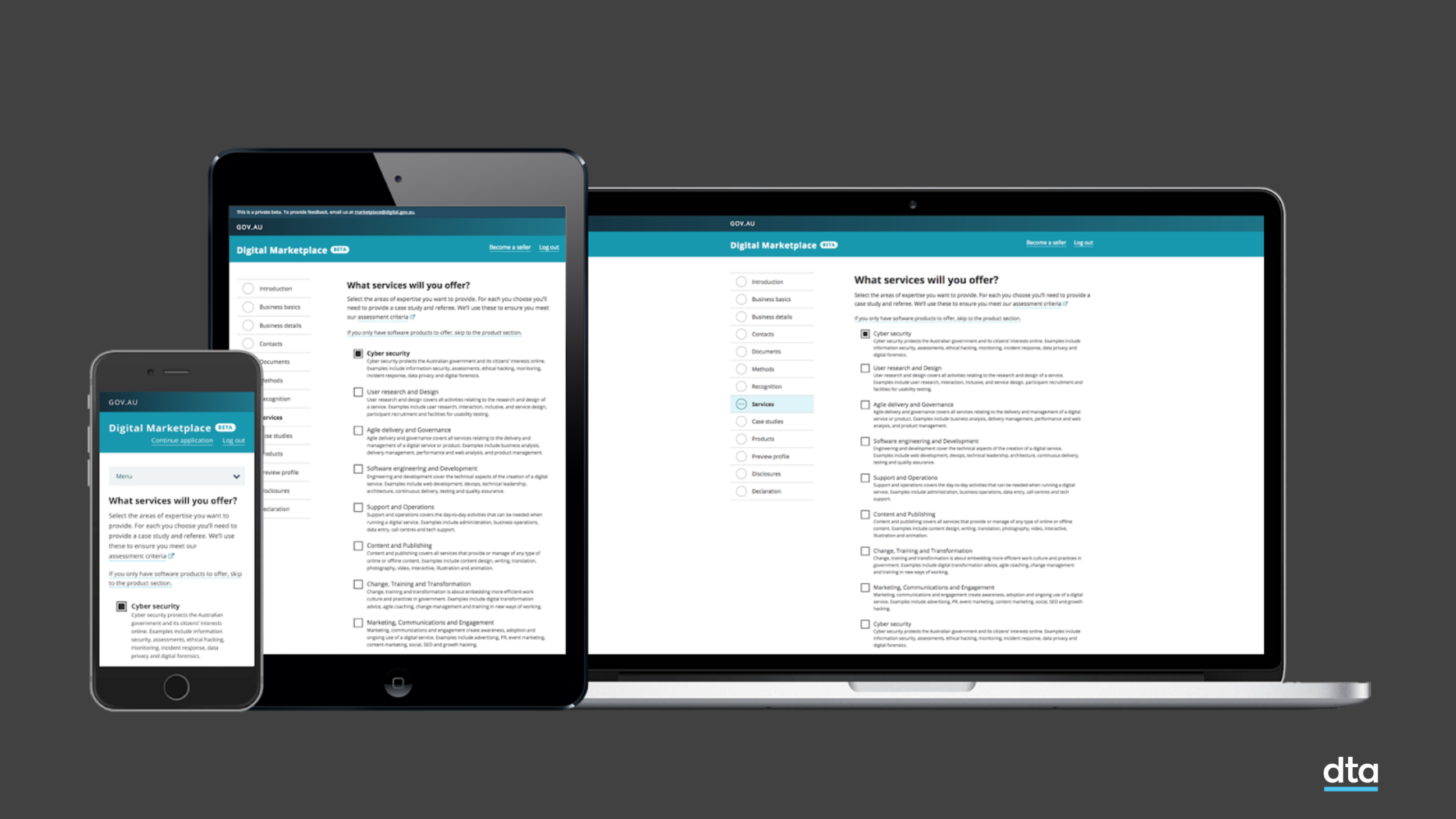
And so, the Digital Transformation Office was asked to develop a new procurement platform — the Digital Marketplace — to help make winning work with government more accessible to businesses of all sizes.
-
The Digital Transformation Agency and its agenda was heavily influenced by the excellent work of the GOV.UK transformation program. One aspect of the GOV.UK program was to make its code open source.
After conducting Discovery and Alpha prototyping stages our team made the decision to ‘make a branch’ of the Digital Marketplace platform from the UK Government.
This gave us the tech basis for the platform, however the content referred to UK law and procurement practices so it all needed to be rewritten, and as we had already announced an ambitious ministerial launch date that was a full six weeks ahead of schedule. -
As the Content Designer I had ownership of the content redevelopment across the site.
This included all the information content as well as onboarding forms for buyers and suppliers.
Given our goal of making government IT opportunities more accessible to start-ups and SMEs, I also partner wrote with contract lawyers the Digital Marketplace Master Agreement, so that it was in plain language that could be understood by suppliers without need to resort to expensive legal advice.
With my background in advertising I also led growth hacking activities and blog writing to promote the new service.
With thanks to
Catherine Thompson, Product Owner; Julie Nikolich, Delivery Manager; Matt Smith, Tech Lead; Robyn Gillot, User Researcher; Neil Dunbar, Service Designer; Lou Farnsworth, Interaction Designer -
Within a year of launch the Digital Marketplace won the OpenGov Recognition of Excellence Award.
Two years after launch, the DTA celebrated 1000 opportunties being published through the Digital Marketplace, with $248M of contracts awarded and, of those, 75% were awarded to small-to-medium businesses.

Recognition of Excellence Award 2017
“The Digital Marketplace is a great example of how government can deliver a real product, used by real people very, very quickly by working in a lean and agile way.”
— Paul Shetler, DTO Chief Executive Officer

CASE STUDY
Creating a new content vision for Australia.com



-
Tourism Australia came to DT with an amazing brief: a new Australia.com that wasn’t just a tweak of the current site — it had to be a completely new experience. Something that benchmarked the service beyond the tourism category.
An entirely new site that responded to the major trends changing our world — in content, data, collaboration and co-creation.
-
The essence of our strategy was to deliver ‘the best view of Australia from anywhere in the world.’ From a content perspective this meant shifting from a website that was a bit like an encyclopedia of Australian locations, to a site that was rich in images, videos and storytelling and that was kept current using ‘flow content’ which was a mix of social, events and travel offers, which could be tailored to behavioural and geographical personas.
In developing the content strategy, as well as completing a detailed audit of the 800 page website, we also took the time to interview each of the different parts of Tourism Australia that had a hand in content creation. This included digital, social, events, marketing and public relations.What we learned was that there were huge opportunities for these teams to work more closely together to deliver a combined experience, instead of each part of the business publishing their info on their part of the website. And so our content strategy also involved some ideas for hiring an ‘Editor-in-chief’ and workflow to govern the new content ecosystem.
-
This was a big project with deliverables from all disciplines at DT.
My role was to complete the content audit, and deliver the content strategy — which brought together the content vision and also the wider team vision and progress into a handbook for developing and maintaining the site.
With thanks to
Jason Massarotto, Richard Davy, Neil Dunbar, Lucy Hehir, Luke Evans, Tim Evans, Chris Jerochim and Gordon McNenney. -
In the year after the site launched the number of visitors to Australia increased by 10%. And the site was recognised in the AIMIA Awards, winning ‘Best Tourism Website’.
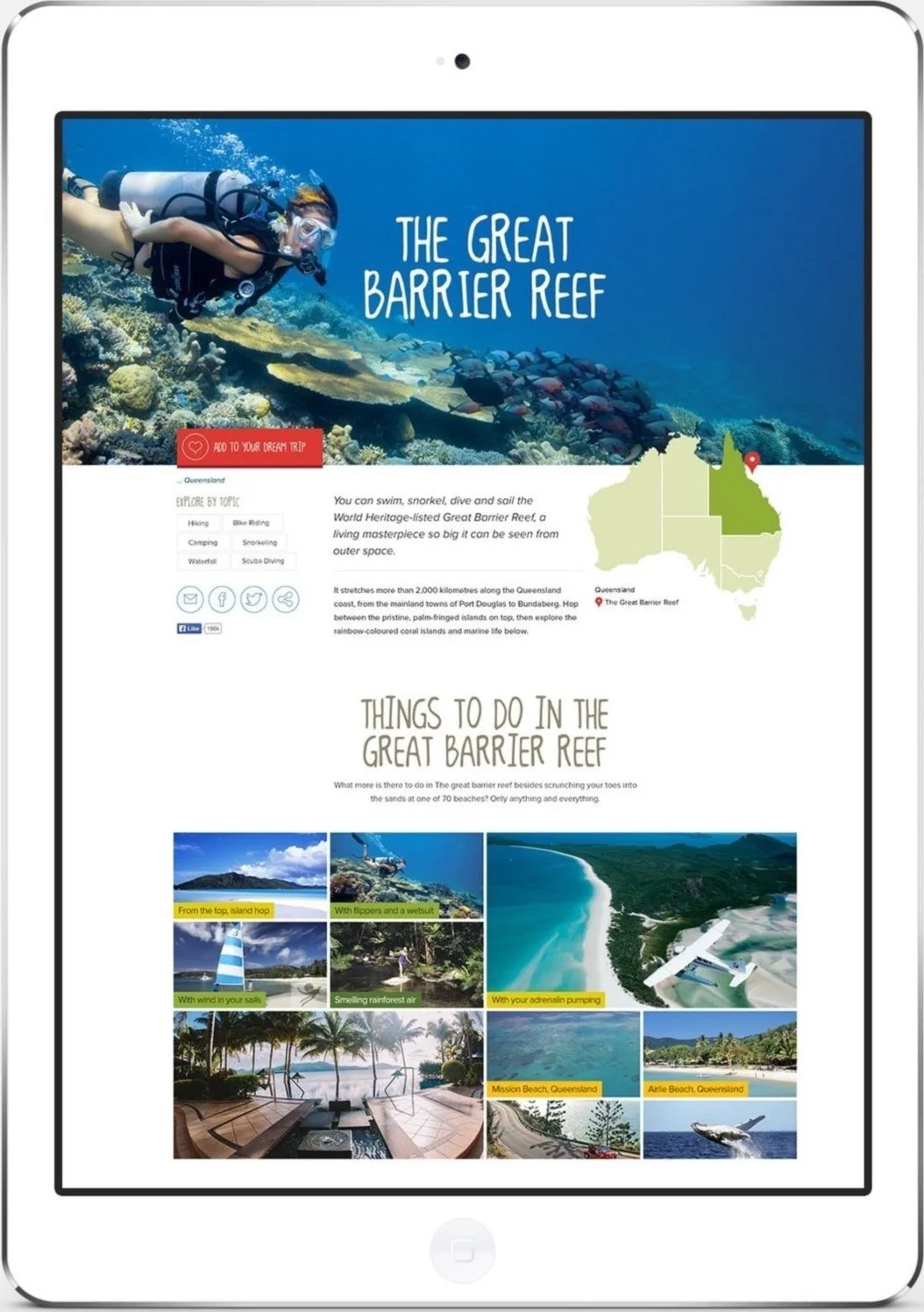
From encyclopedia to magazine
The previous Australia.com content was described by Tourism Australia staff as ‘encyclopaedic’.
And so, the simplest layer of our strategy was to make the site more visually appealing, like flipping through a travel magazine.
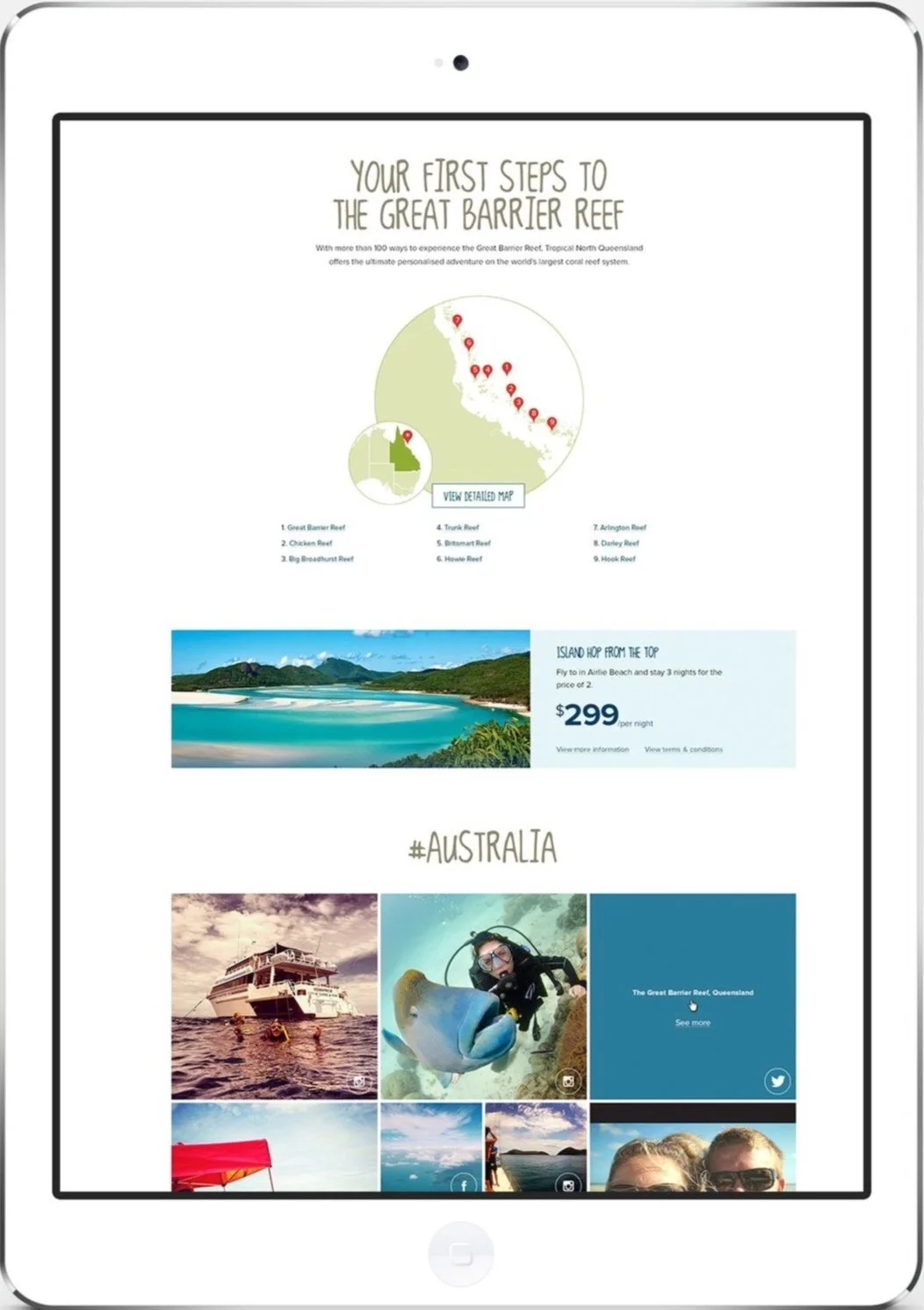
Keeping it fresh, with ‘flow’ content
As well as the slow to change ‘stock content’ we added new content types for ‘flow content’.
This content included things like travel offers, events and social content from other channels like Tourism Australia’s incredibly popular Instagram and Facebook.
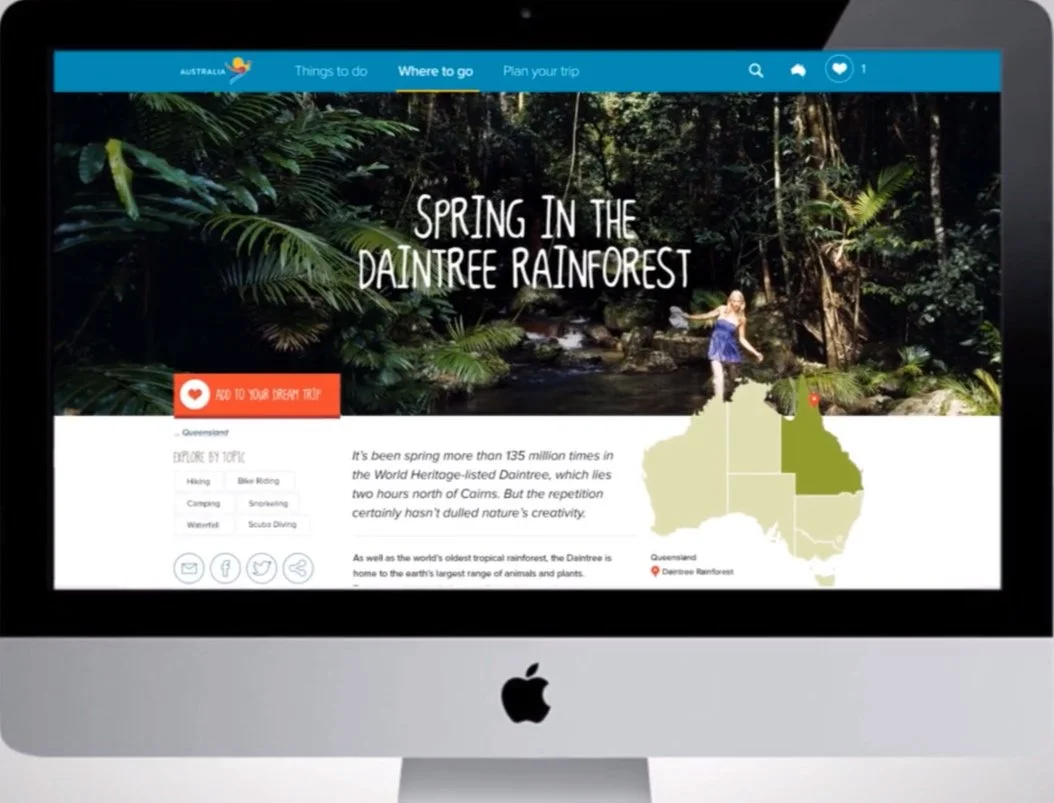
And personalisation
on a global scale
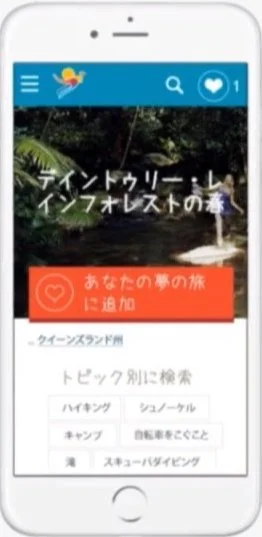
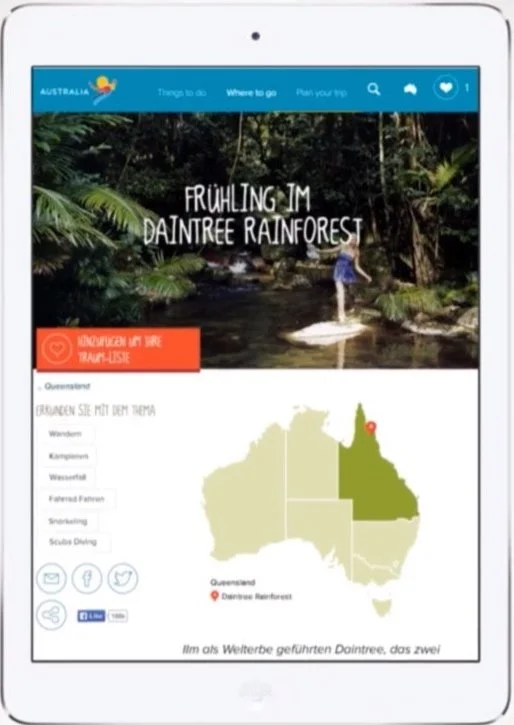
In a massive collaboration between design, tech, ux, & content, the site was made available in 11 languages with no loss of design fidelity, loading speed or SEO.
We also conducted research into the motivations for travel in different locations around the world, and used these insights to geographically personalise images to show the aspect of Australia that those travellers were seeking.
10% increase in tourism
in the year following launch
Annual Report 2015/2016